By Violetta Coretnic - Producer & Co-founder, We Stream.

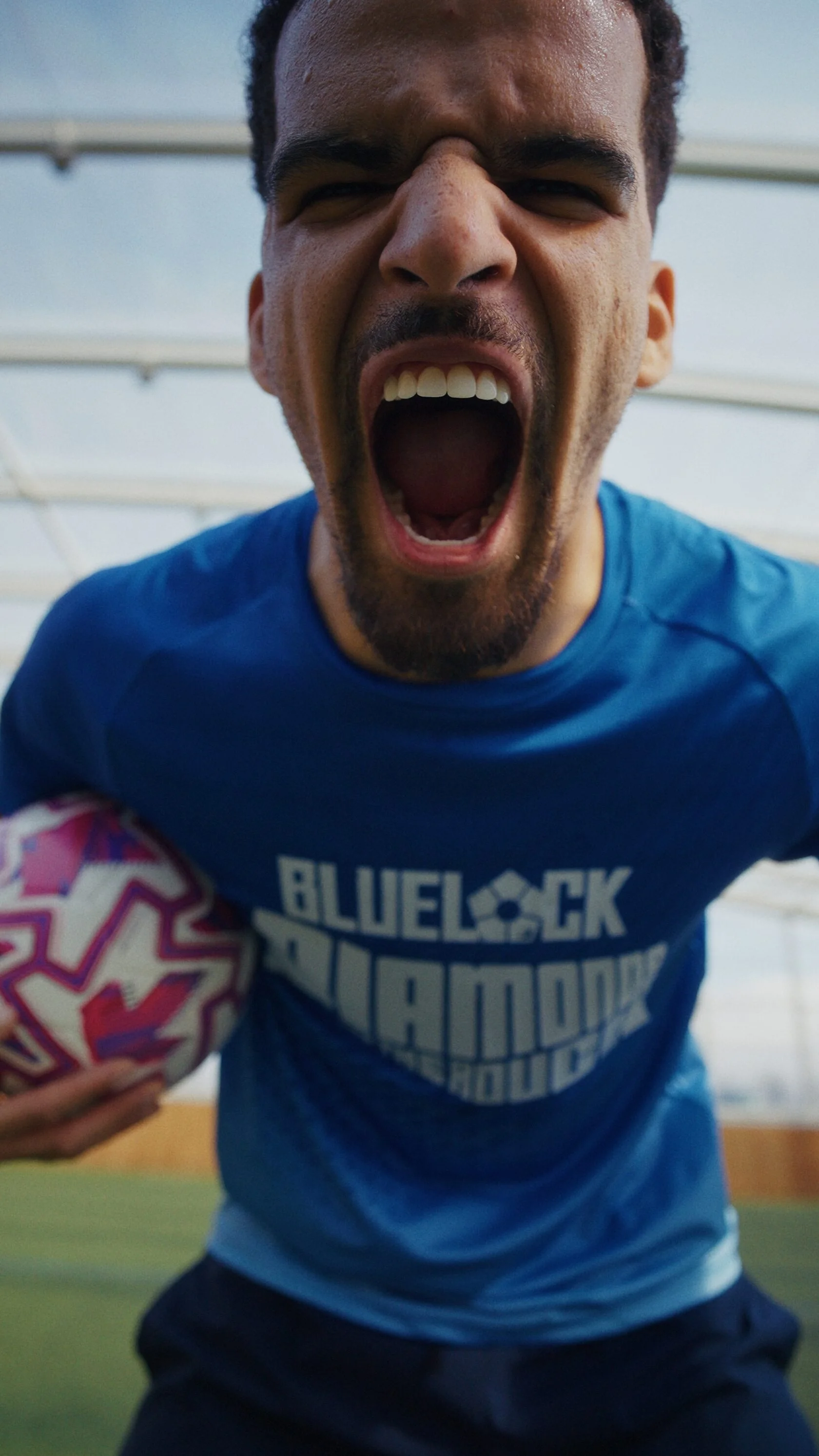
Athlete shoots almost never fail on creativity. They fail on access. You can have the script, the storyboard, the crew, and the kit - and then the talent window moves, the venue changes with two days' notice, and you find out what your production company is actually made of. In April 2026 we produced the shoot day for Blue Lock × Dominic Solanke - "Diamonds in the Rough", a social campaign for Kodansha's Blue Lock franchise, commissioned through Story Arc Inc. in Los Angeles. The original plan gave us four hours with Dom at one venue. What we actually got was roughly 90 minutes of filming time at a Premier League training ground confirmed 48 hours before the shoot.

The footage was on a Google Drive link the next morning. Here's how.

The brief: put a Premier League striker

inside a manga universe

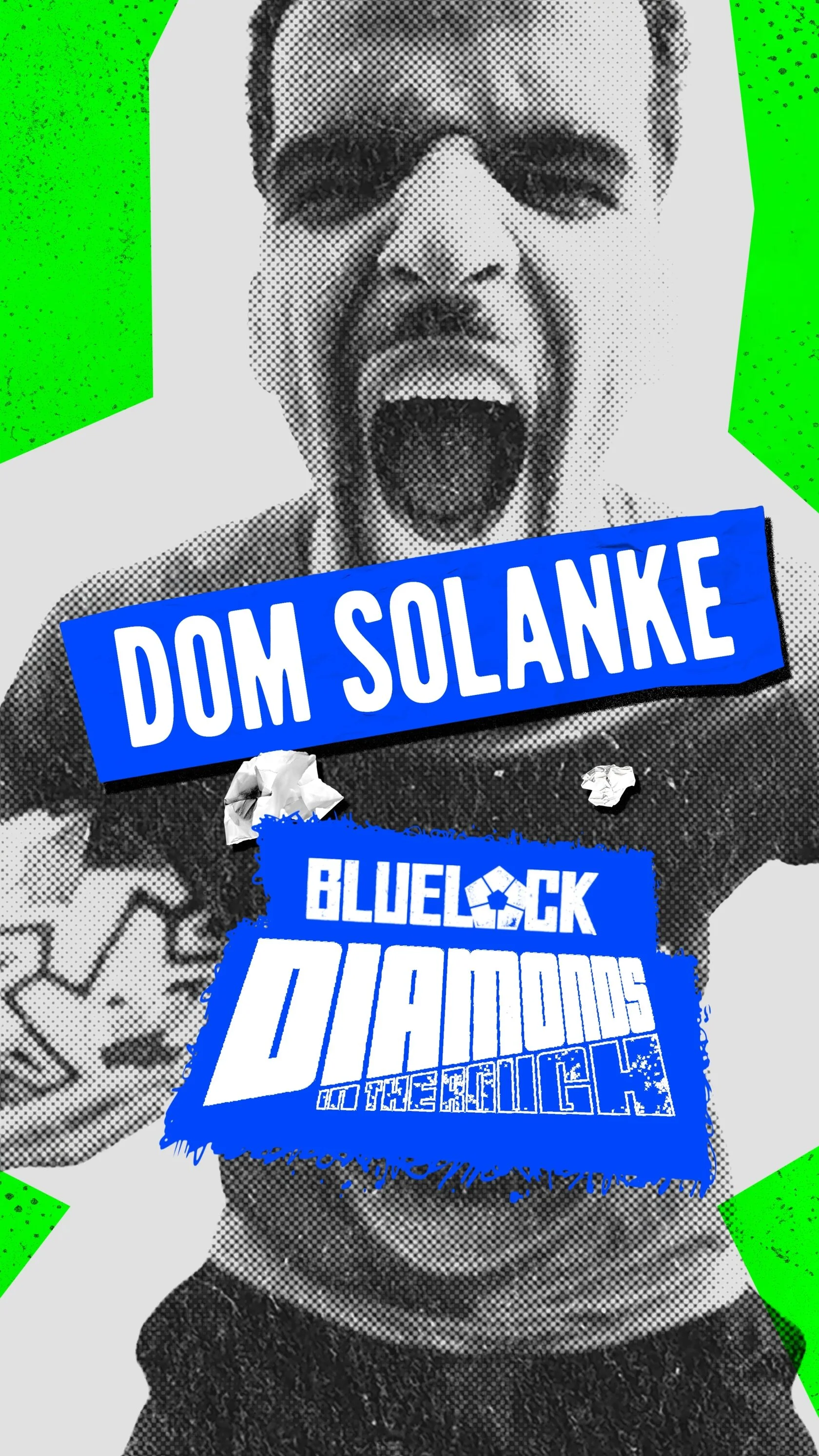
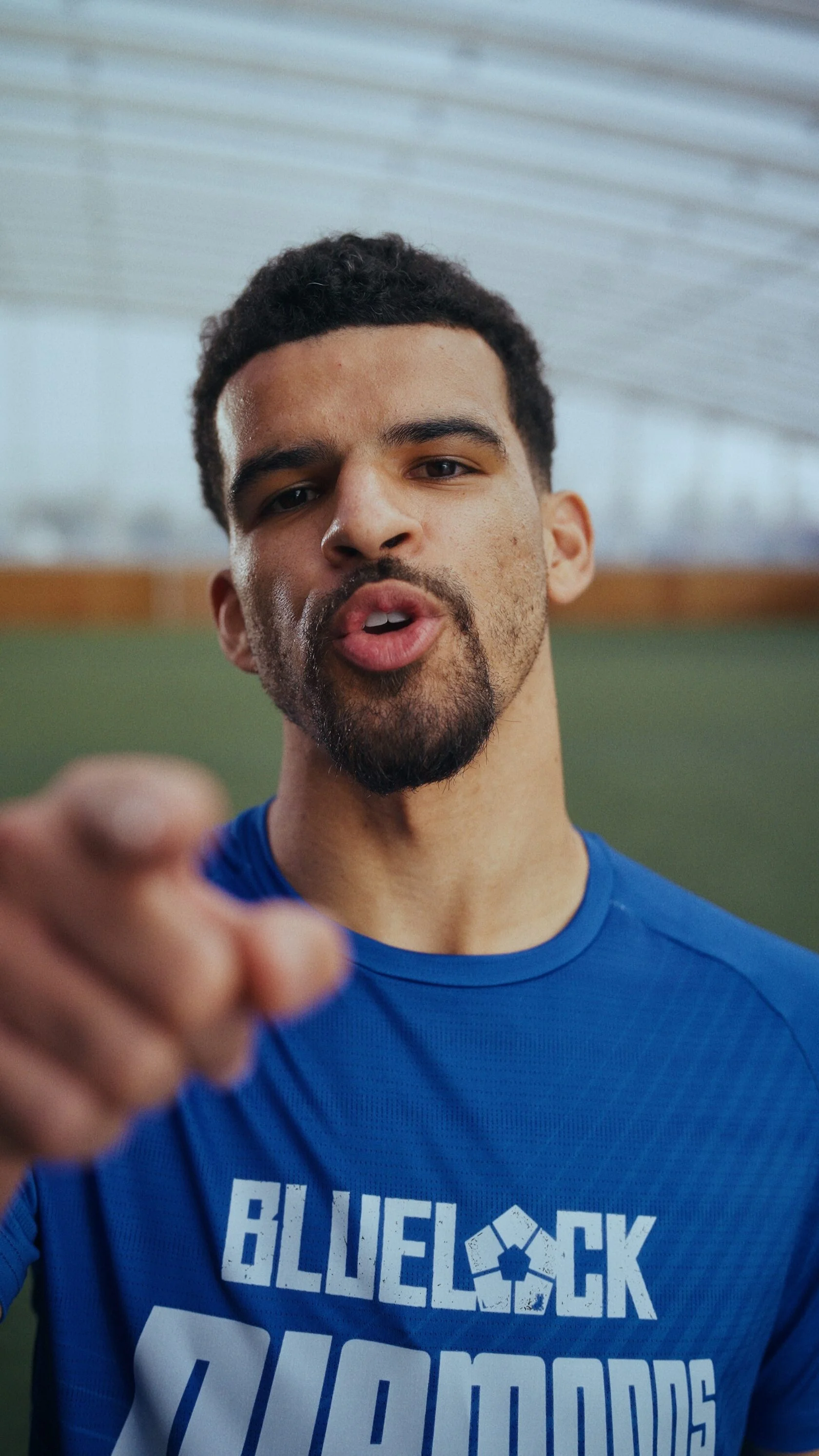
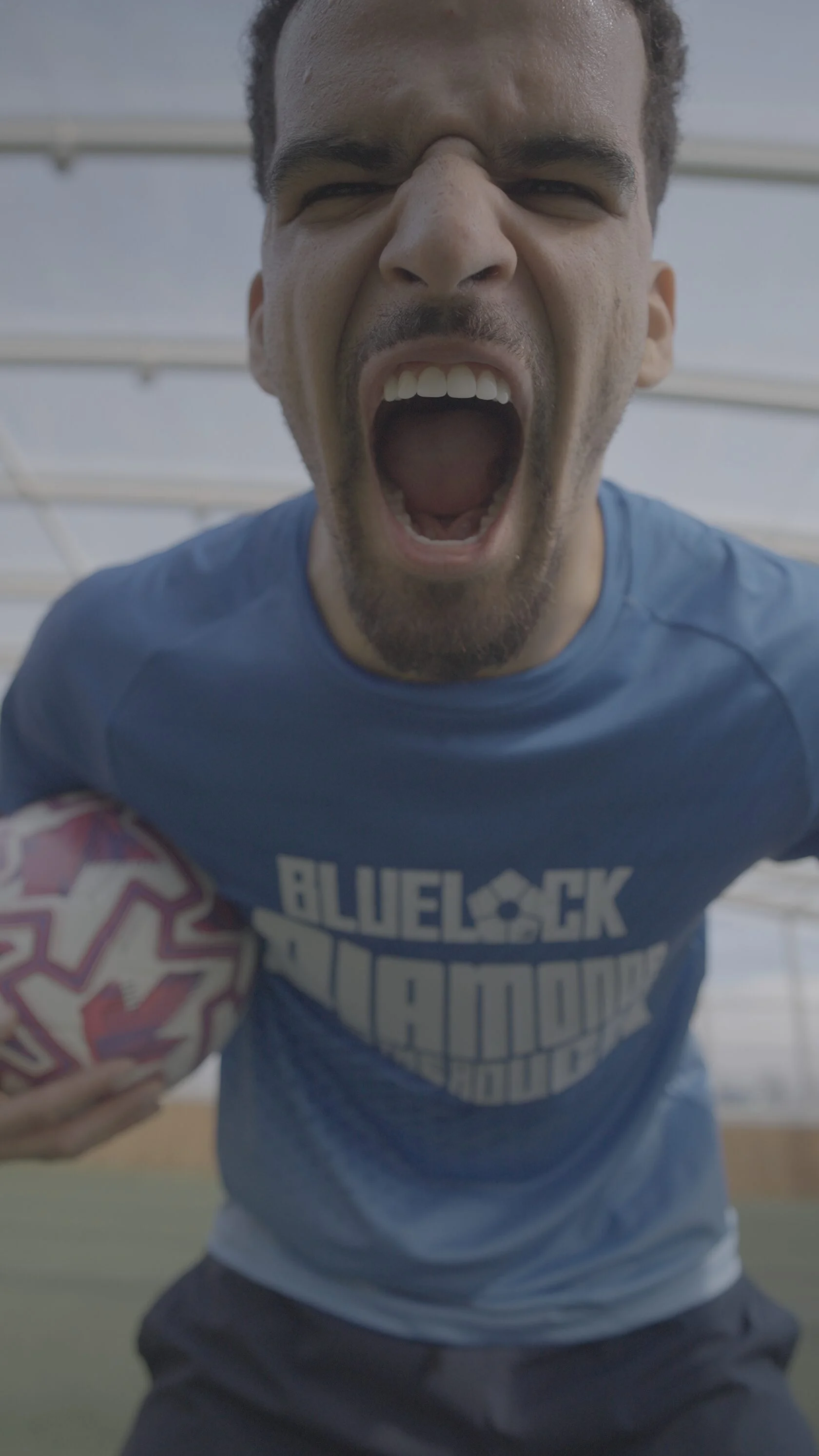
Blue Lock, if you haven't crossed paths with it, is one of the biggest sports manga and anime franchises in the world - a story built around a brutal national programme to manufacture the perfect striker. The campaign idea was sharp: Dominic Solanke, Tottenham Hotspur's striker, delivering a monologue to camera in the voice of the franchise's notorious coach figure. Intense, snarky, full tough-love mode. The film would intercut his delivery with training b-roll and stylised manga panels, launching a fan competition under #bluelockdiamonds on 27 May.

Story Arc, the LA agency producing the campaign for Kodansha, needed a London production partner for the shoot day itself. Their team would handle the edit, the animation treatment, the music. We would handle everything that happens before and during the moment a camera rolls, and the colour grade at the end.

That split sounds simple on paper. It almost never is. When an agency is eight time zones away, the local partner isn't just operating cameras. You become the agency's eyes, their contingency plan, and occasionally their wardrobe department.

What changed in the eight days before the shoot

On 8 April, the shoot moved from 10 April to 16 April - two days' notice. Our standard agreement carries a rescheduling fee for changes inside 48 hours. We waived it. A campaign like this lives or dies on the relationship, and the change wasn't anyone's negligence; it was the reality of working around a professional footballer's calendar.
On 13 April, we learned the professional archival footage the edit was counting on wouldn't be available. That meant our b-roll would have to carry far more of the final film than planned. We sourced a focus puller and a second camera operator at three days' notice, so the b-roll could be captured from multiple angles with precise focus rather than hoping one handheld camera caught everything.
On 14 April at 15:20, the venue changed from the original location to Tottenham Hotspur FC's training ground in Enfield. The same day, Dom's availability shifted to a morning window because of a training session and a high-priority match the following day. Four hours became roughly 90 minutes.
The specific pitch we'd be shooting on - and whether it had power - wasn't confirmed until 23:00 the night before.
Most of what clients are paying for is invisible in moments like this. There's no line item on an invoice called "absorbing two days of chaos without passing the stress on to talent or client". But that's the product.

Getting eight crew accredited at a Premier League training ground in under two hours

Premier League venues don't let film crews walk in. Spurs required a full crew list, a complete equipment manifest, vehicle registration numbers, and our Public Liability Insurance certificate before anyone got near the gate. The request landed on 14 April at 16:40. Everything was submitted by 18:00 the same day - accreditation done in under two hours.

The PLI certificate went over before they formally asked for it. After 325 shoots, you learn which documents a venue is going to want, and sending them early is the cheapest goodwill you'll ever buy. It's also, in our experience, the difference between a security team that works with you on the day and one that works against you.

That goodwill paid off almost immediately. Official site access was confirmed for 08:15. When the crew arrived, a staff member on the ground helped identify the right entry point and informally waved us in early - setup began at 07:40, which bought us 35 extra minutes against a schedule that had none to spare.

We Stream production crew arriving at a Premier League training ground for the Kodansha Blue Lock shoot. Full Spurs security accreditation completed by We Stream in under two hours on 14 April.
Planning lighting for a pitch we had never seen
With no confirmed pitch type and no power supply information until we physically arrived, there was only one responsible option: prepare for every scenario at once. We brought a full outdoor-capable lighting package - an Aputure LS 1200x, an LS 600x Pro, a 12x12 butterfly frame with silent grid cloth, 8x8 frames with blackout, silk, and UltraBounce textiles, fifteen 7kg sandbags - plus EcoFlow battery power in case the pitch had no mains supply at all.

Power was confirmed only when we walked onto the pitch. The pitch turned out to be indoor, but the kit didn't go to waste: overcast conditions shifted to intermittent sunshine mid-shoot, and the lighting team spent the entire b-roll session repositioning flags, diffusion frames, and the butterfly to hold consistent exposure on Dom as the light through the venue changed.


This is the part of the proposal conversation that usually gets squeezed. Bringing contingency kit costs money and adds complexity, and on a calmer production you'd refine the package 72 hours out instead. We've recommended exactly that to Story Arc for next time. But when the venue is confirmed at 23:00 the night before, over-preparation is the only kind of preparation there is.

What a 06:40 call time buys you when talent has 90 minutes
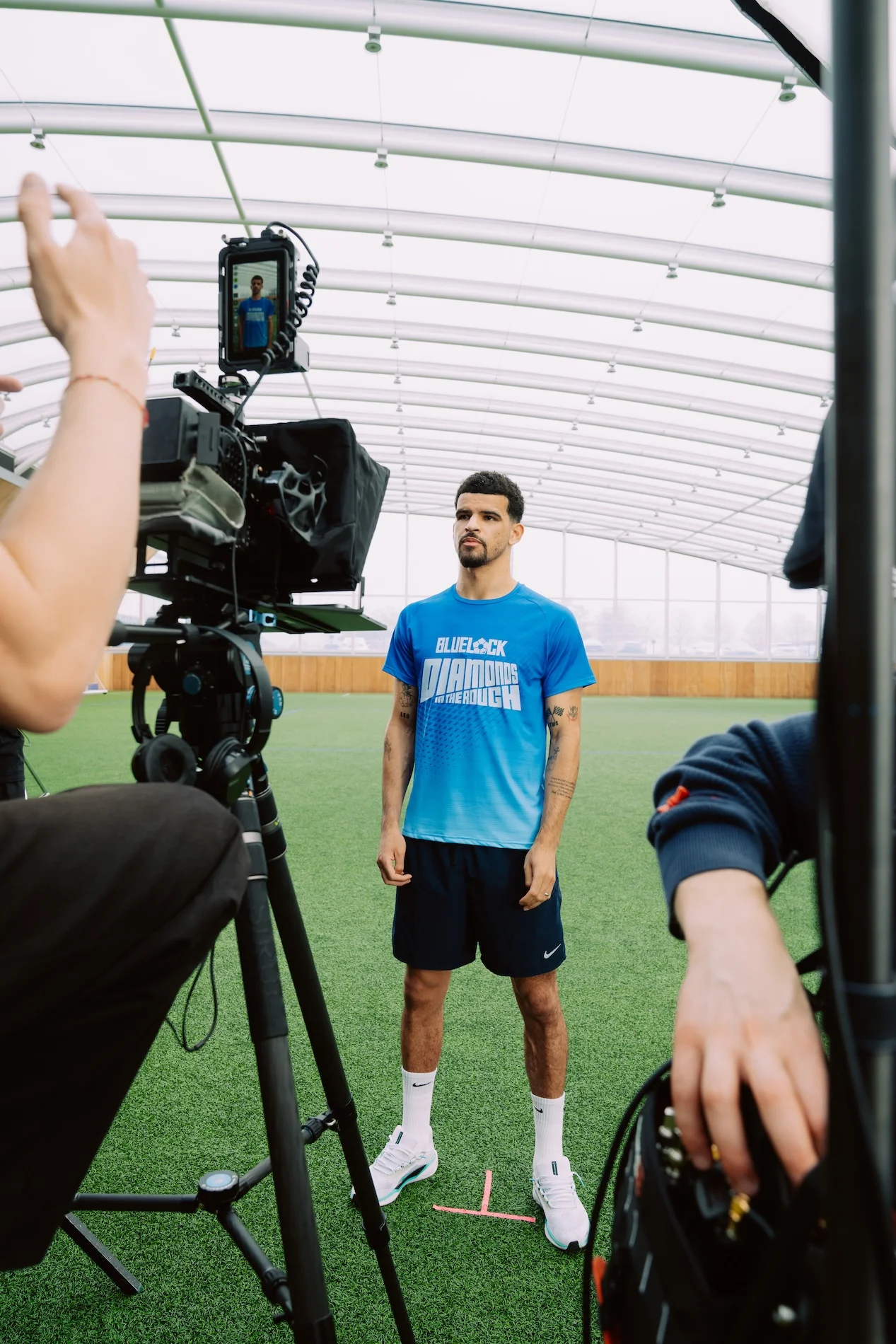
Crew call was 06:40. Eight people: producer, DoP, second camera operator, focus puller, gaffer, spark, sound engineer, production assistant. By the time Dom arrived at 09:00 to warm up, the set was lit, two camera builds were ready - one handheld, one on a tripod with a teleprompter - a phone was already running a timelapse at the field edge, and his shirts had been steamed and checked on camera before he ever put one on.

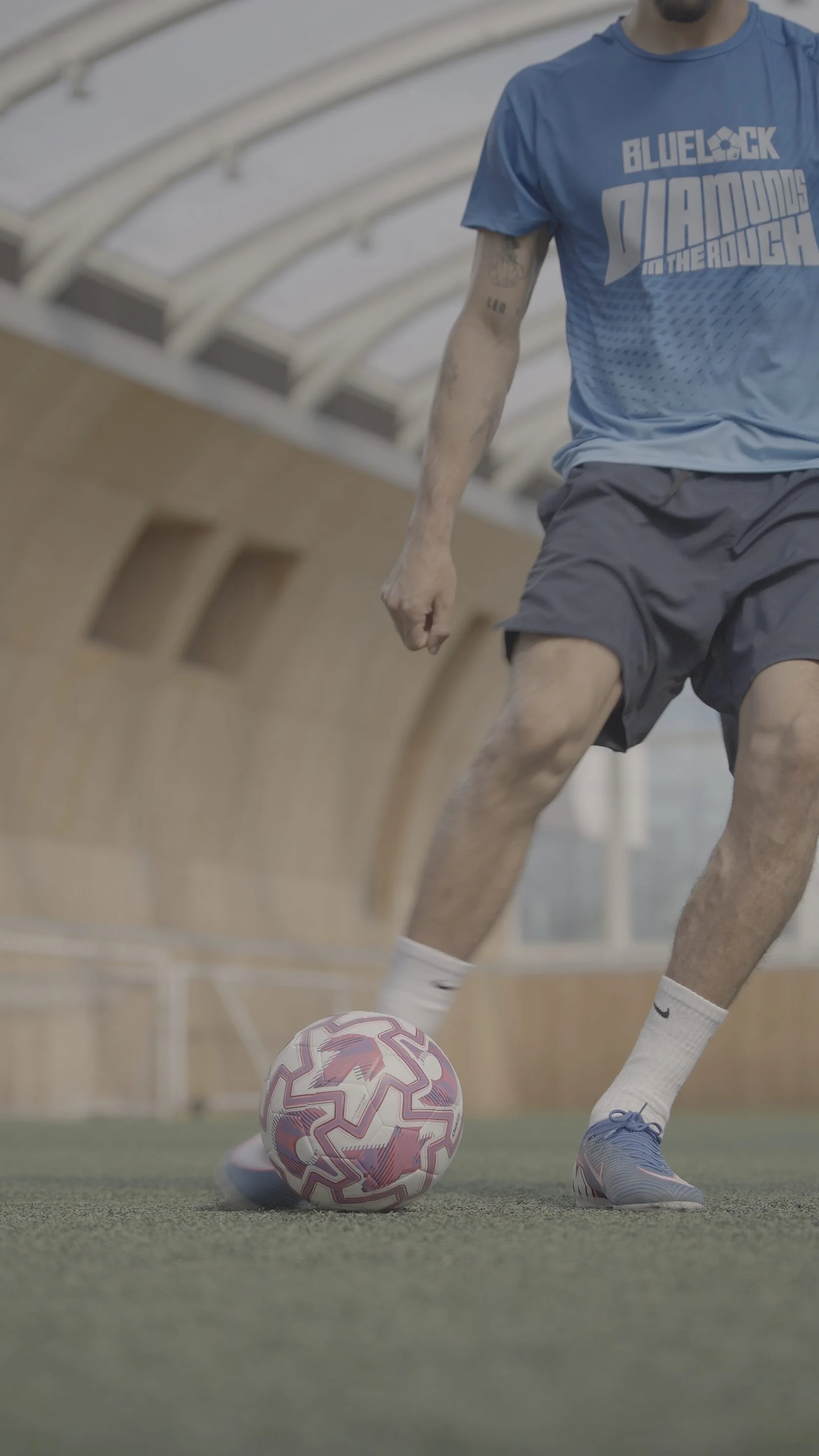
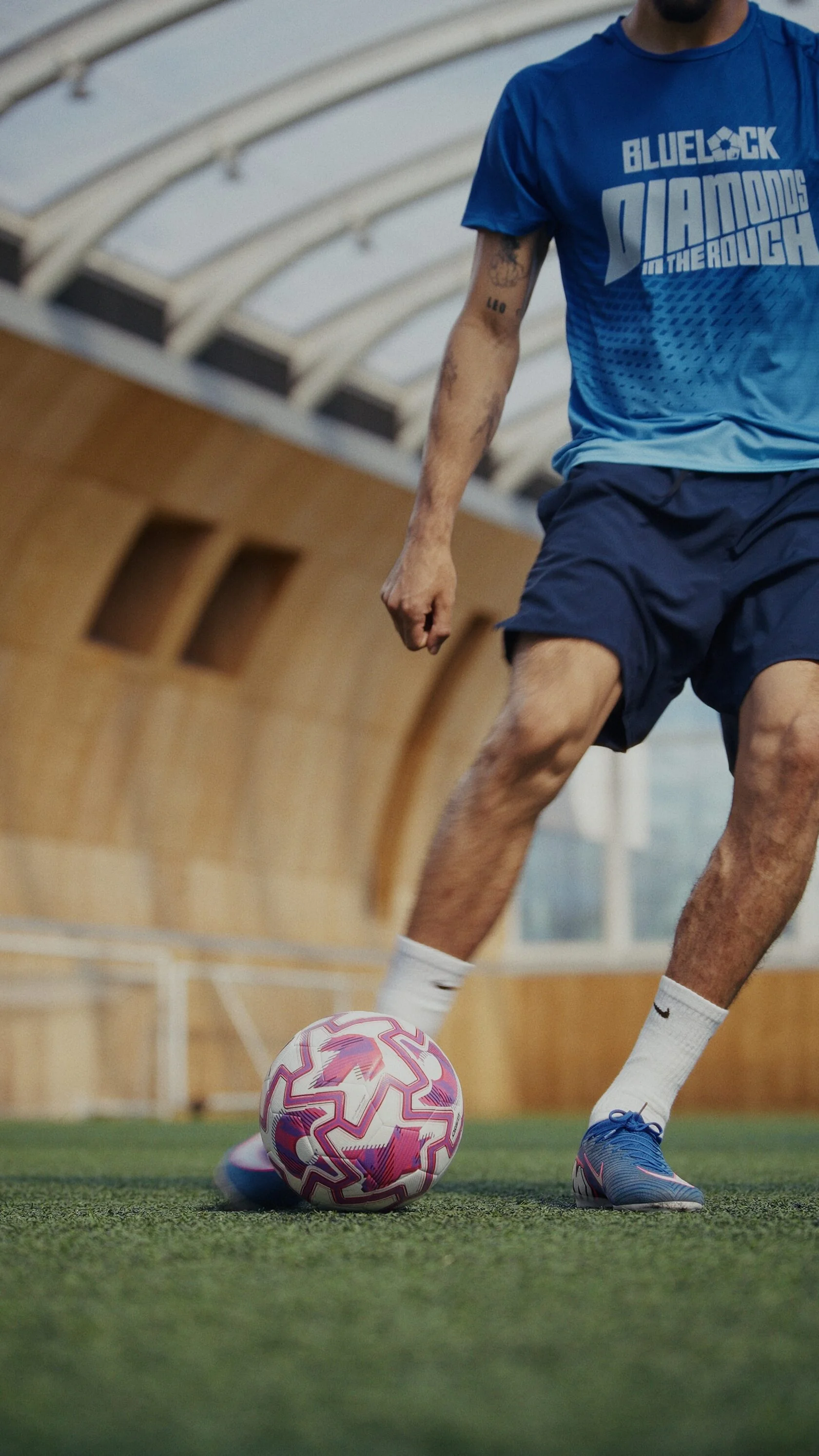
The scripted monologue went down first, shot at 25fps. Then b-roll: dribbling, footwork, ball work across the pitch, captured on two Sony FX3s at 100fps so the edit could speed-ramp freely. We also recorded isolated takes of the opening and closing lines, so the LA editors would have flexibility without needing a pickup day that was never going to exist.

Two decisions on the day mattered more than anything in the plan. First, we cut the goal-kicking setups from the b-roll schedule - rigging them would have eaten time the compressed window couldn't afford, so alternative b-roll was devised on the spot. Second, the lavalier mic came off for the b-roll block. Dom was more comfortable without it, the boom held ambient sound throughout, and a relaxed athlete on camera is worth more than a redundant audio channel.

Wrap was 11:30, ahead of schedule. Dom went to training. Spurs had one further requirement - the training ground couldn't be identifiable in the final edit - so camera angles during the talking head were adjusted on set to comply. The kind of constraint you only handle gracefully if someone on the crew is thinking about the deliverable, not just the shot list.

Next-day delivery:

69 video clips, 36 audio files, one link

Files were delivered on 17 April, the morning after the shoot: 36 clips from the primary camera, 33 from the second, all 4K 4:2:2 10-bit in S-Log3, plus 36 audio clips from the Sound Devices MixPre-10 II - organised on a Google Drive link with colour reference stills showing our intended grade direction and a selection of example edits the LA team could use as style references.

We've delivered next-day on every project since May 2022 and never missed a deadline. It's less about heroics than habit: cards are backed up to drives immediately after every shoot, and the delivery structure is decided before the shoot, not after.

Colour grading across eight time zones:

cut to delivery in under 48 hours

The post-production split gave Story Arc's team the edit, animation, and music, with We Stream returning for the colour grade once the cut was locked. Round-tripping a grade across two companies and an eight-hour time difference is a workflow question, and workflow questions are where remote collaborations usually fray.

The cut arrived late on 27 April - a clip list with timecodes and a rough cut for reference, with one condition attached: the film had to be finalised in LA by the end of that week. Our contract allowed five business days for the grade. The schedule allowed nothing like it.
Then the XML didn't conform. The timeline coming out of the LA edit wouldn't rebuild cleanly in DaVinci Resolve - missing media, nested comps, graphics baked into the sequence. Our colourist wrote back the same day with a precise conform spec: a clean duplicate sequence, video files only, effects and speed changes stripped, original camera files with original names, native resolution and frame rate, everything flattened. Each shot a direct reference to the source clip, so the graded files could drop back into the LA timeline with nothing moved.

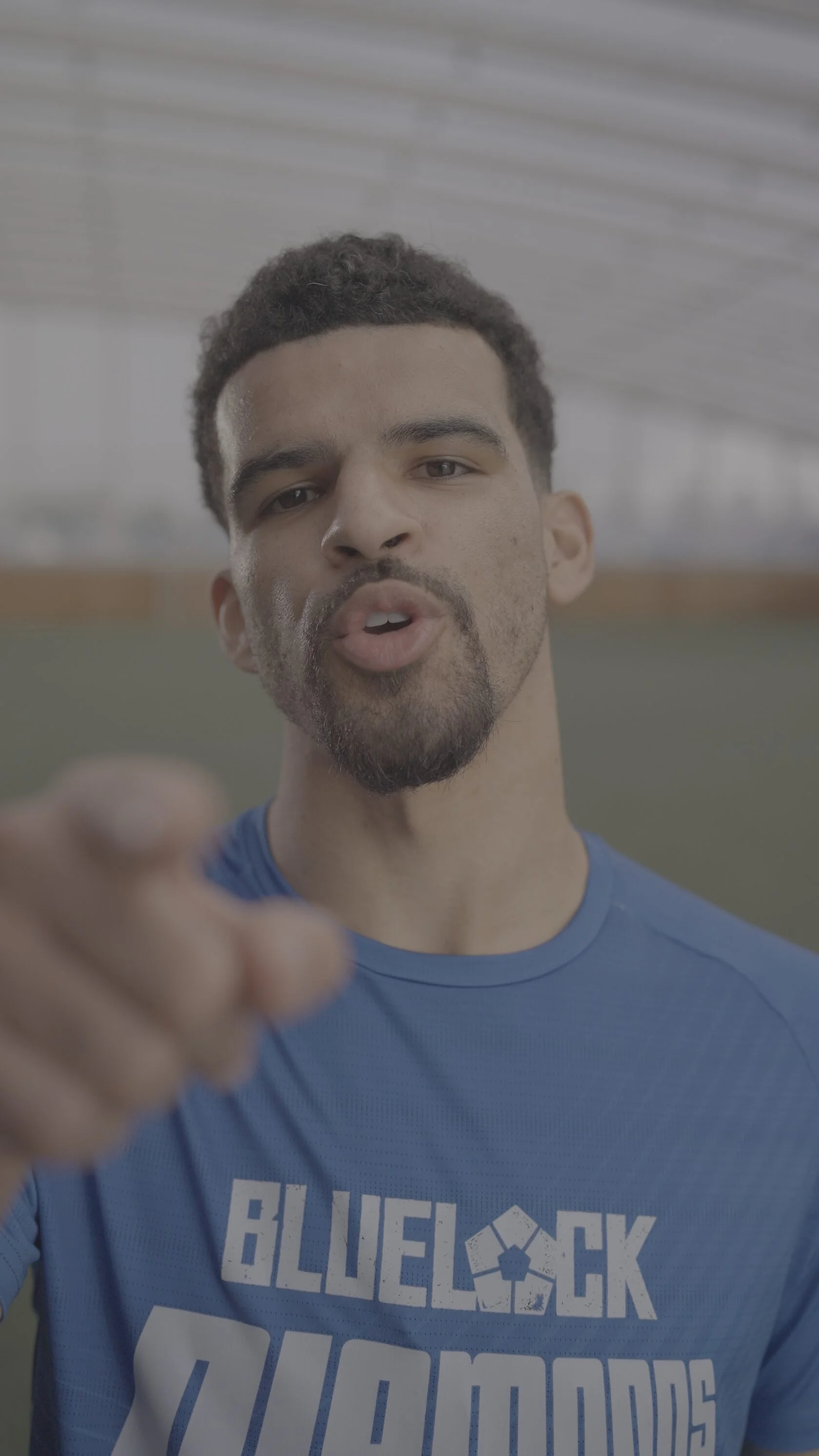
Email across eight time zones is slow, so we didn't stay there. A WhatsApp group went up the same day, and by 21:00 London time - early afternoon in LA - our colourist and their editor were on a Google Meet, screens shared, comparing timelines clip by clip until both sides were working from the same sequence. The clean XML came through that evening. The grade was built in DaVinci on the original camera files and delivered via Frame.io at 18:42 on 29 April.
Before
After
◀▶
Before
After
◀▶
Under 48 hours from receiving the cut to delivering the graded film, including diagnosing and fixing a conform problem that originated on the other side of the Atlantic. The contract said five business days. The client's deadline said Friday. We've found the timeline that actually matters is always the third one - the one the campaign needs.

You could argue the screen-share call wasn't in scope. We'd argue it's the whole job. A technically perfect grade the client's editor can't reintegrate is worth nothing, and the cost of one call is always lower than the cost of three rounds of confused file exchanges.

The edit we made that nobody asked for

When Story Arc's cut came through for grading, we watched it the way any production team watches footage they shot: with opinions. We could see ideas in the material the cut hadn't used. So our editor put together our own version of the edit - unbilled, unrequested - and we sent it to LA as a reference.

Their answer taught us something about the constraints they were working inside. Licensing limited the music they could use, and rights restrictions meant certain franchise material couldn't appear in the clip at all - boundaries that shaped their cut in ways we, sitting outside the rights conversation, couldn't see. But the version we sent was passed along to their editor for inspiration, and elements of it fed into the finished film. Their editor's response, more or less: he wished we could have done the whole edit, but the client's requirements meant it had to stay on their side.

We probably wouldn't do this on every project. On this one it felt right: the b-roll was carrying more weight than originally planned, we knew the footage better than anyone, and the campaign deserved the strongest film the material could support. Whether a production partner cares about the final film or just their portion of it - you usually find out exactly here.

What happened when the film went live

The campaign launched on 27 May under #bluelockdiamonds. "We're officially live!!" arrived on WhatsApp at five o'clock that evening, followed shortly by the only review that matters on a licensed campaign: Kodansha was excited, and Dom loved it.

As of 12 June - just over two weeks in, with the competition still open - the film has passed 170,000 views, and the launch announcement alone has drawn 7,629 likes and 3,314 shares. Full campaign results will be added here once the competition closes.

The finished film - the hero piece of the campaign, with Story Arc's edit, animation treatment, and our footage and grade - is live here: https://www.instagram.com/reel/DYSGkpBOeNm/. The wider campaign ran for weeks beyond it, with influencer content and participant entries building around the hero film as its anchor.

Kodansha's written feedback, when the project closed out: "The video came out looking fantastic. We're all very pleased with how it came out."

And Story Arc's founder, Douglas Parker, put it in a way no case study could improve on: "Can't believe I found your crew. Serendipity!" Followed, a few messages later, by "I'll find more reasons to shoot in London."

Dominic Solanke's Instagram showing the Blue Lock Diamonds in the Rough campaign film at 172,000 views, produced by We Stream and Story Arc for Kodansha USA. Launch post drew 7,629 likes and 3,314 shares.

What this job is really evidence of

If you're an agency outside the UK planning a shoot with talent, a sensitive venue, or both, the question worth asking a London production partner isn't "what's your kit list". It's "what happens when the plan changes inside 48 hours" - because on athlete productions, it will. Venue moved with two days' notice. Talent window cut by more than half. Archival footage gone. T-shirts reprinted the evening before, with our producer reaching the print facility at 18:27 against a 19:00 close, backup shirt in hand in case the print failed. Even the football the production supplied arrived flat; we inflated it and bought a spare. Then a broken XML, fixed on a screen-share between London and LA, and a grade delivered in under 48 hours against a contract that allowed five business days.


None of that appears in the finished film. That's the point. The finished film looks like a campaign that went exactly to plan.


A shoot day is rarely won on the shoot day.

FAQ

What makes athlete video production different from standard commercial production?
Access. You can have the script, the crew, and the kit - and then the talent window moves, the venue changes with two days' notice, and you find out what the production company is actually made of. For the Blue Lock × Dominic Solanke campaign, four confirmed hours became roughly ninety minutes at a Premier League training ground confirmed forty-eight hours before the shoot. The shoot completed ahead of schedule. The footage was on a Google Drive link the next morning.
How do you get a full crew accredited at a Premier League training ground quickly?
Prepare the documents before being asked for them. For the Spurs training ground shoot, the request for crew list, equipment manifest, vehicle registration numbers, and public liability insurance arrived at 16:40. Everything was submitted by 18:00 - under two hours. The PLI certificate went across before they formally requested it. After 325 shoots, the documents a venue will want are predictable. Sending them early is the cheapest goodwill available and, in practice, the difference between a security team that works with you and one that works against you.
How do you plan lighting for an outdoor shoot when the venue and power supply are unconfirmed the night before?
Prepare for every scenario simultaneously. For the Blue Lock shoot at a Premier League training ground, the pitch type and power supply were unconfirmed until the crew physically arrived. We brought a full outdoor-capable lighting package - Aputure LS 1200x, LS 600x Pro, a 12x12 butterfly frame, 8x8 flags with multiple textile options, and EcoFlow battery power as mains backup. When conditions changed mid-shoot - overcast to intermittent sunshine - the lighting team spent the b-roll session repositioning the full rig to hold consistent exposure throughout.
How do you maximise a short athlete talent window on a branded content shoot?
Have everything ready before the talent arrives. For the Dominic Solanke shoot, crew call was 06:40 for a 09:00 talent arrival - two camera builds ready, teleprompter in position, shirts steamed and checked on camera before he put one on. The scripted monologue went first. Then b-roll at 100fps for speed-ramp flexibility. Goal-kicking setups were cut from the schedule on the day when it became clear rigging them would consume time the compressed window could not afford, and alternative b-roll was devised on the spot. Wrap was 11:30, ahead of schedule.
What does next-day footage delivery actually involve on an athlete shoot?
Organised, labelled files on a shared drive the morning after filming - not raw dumps. For the Blue Lock shoot, delivery comprised 69 video clips across two cameras (4K 4:2:2 10-bit S-Log3), 36 audio files from a Sound Devices MixPre-10 II, colour reference stills showing the intended grade direction, and example edits for the LA team as style references. Cards are backed up to drives immediately after every shoot. The delivery structure is decided before the shoot, not after. We Stream has delivered next-day on every project since May 2022 and never missed a deadline.
How do you work with an international agency as a London production partner when you are eight time zones apart?
Move communication off email and onto real-time tools the moment a problem requires it. For the Blue Lock campaign, a conform issue in the XML from the LA edit team's timeline was diagnosed, specified, and resolved on a WhatsApp group and a Google Meet screen-share between London and LA in one evening. The clean XML came through that evening. The colour grade was delivered via Frame.io within forty-eight hours of receiving the locked cut - against a contract that allowed five business days. The call was not in scope. It was the job.
What is the role of a London production partner on an internationally commissioned athlete campaign?
Everything that happens before and during the moment a camera rolls - plus whatever the agency's remote position cannot cover. On the Blue Lock × Dominic Solanke shoot, that included crew accreditation, venue logistics, lighting contingency planning, on-set wardrobe (shirts steamed and checked), equipment not in the brief (a flat football bought and inflated on the day), and venue compliance (camera angles adjusted on set to exclude identifiable training ground features per Spurs' requirements). When an agency is eight time zones away, the local partner is the agency's eyes, their contingency plan, and occasionally their wardrobe department.
How do you handle a colour grade when the edit is built on the other side of the world?
Agree the conform specification in writing before the file transfer, then verify it on a shared screen before grading begins. For the Blue Lock grade, the XML from the LA timeline did not conform cleanly in DaVinci Resolve - missing media, nested comps, baked effects. We wrote back with a precise spec: clean duplicate sequence, video files only, effects stripped, original camera file names and native resolution. Once the clean XML arrived, the grade was built on original camera files and delivered via Frame.io in under forty-eight hours. The conform problem was the same distance as the editor. The solution was a thirty-minute screen-share.
How much does athlete video production in London cost?
Cost depends on crew size, talent window duration, venue access requirements, turnaround timeline, and whether post-production services - colour grade, organising and labelling deliverables - are included. The Blue Lock × Dominic Solanke shoot required eight crew, a full outdoor lighting contingency package, two camera builds, and next-day organised delivery across two cameras and a sound recorder. Athlete shoots on short lead times also carry a premium reflecting compressed logistics. For a full breakdown of day rates and team configurations, see our London video production costs 2026 guide.
What questions should an international agency ask a London production partner before booking an athlete shoot?
One question matters more than any other: what happens when the plan changes inside forty-eight hours? On athlete productions, it will. For the Blue Lock shoot, the venue moved with two days' notice, the talent window was cut by more than half, archival footage was pulled three days before the shoot, the confirmed pitch was unknown until the night before, and the XML for the colour grade needed rebuilding from scratch. Each of those was resolved. The portfolio page shows the finished film. What it does not show is the eight days of logistics that made it possible.
Write us
© All rights reserved. We stream
team@westream.uk