By Violetta Coretnic, producer and co-founder, We Stream.

IGB Live ran on the 1st and 2nd of July in London. The 2025 edition drew over 20,000 visitors from 149 countries at ExCeL - the fourth consecutive year of growth since the event relocated from Amsterdam. It sits within the same iGaming calendar as ICE and SBC - the full picture of how we approach iGaming event videography across these events is covered on the main service page.We were covering two clients simultaneously. One a returning client we'd worked with across Malta, Barcelona, and Rome, the other a company we were shooting for for the first time. Four crew members, split into two pairs, one per client.


Both shoots happened at the same venue on the same days. The problems were completely different.
Alea
Alea
Partner Matrix
Partner Matrix

Client one: the lighting made everyone look like

they were on fire
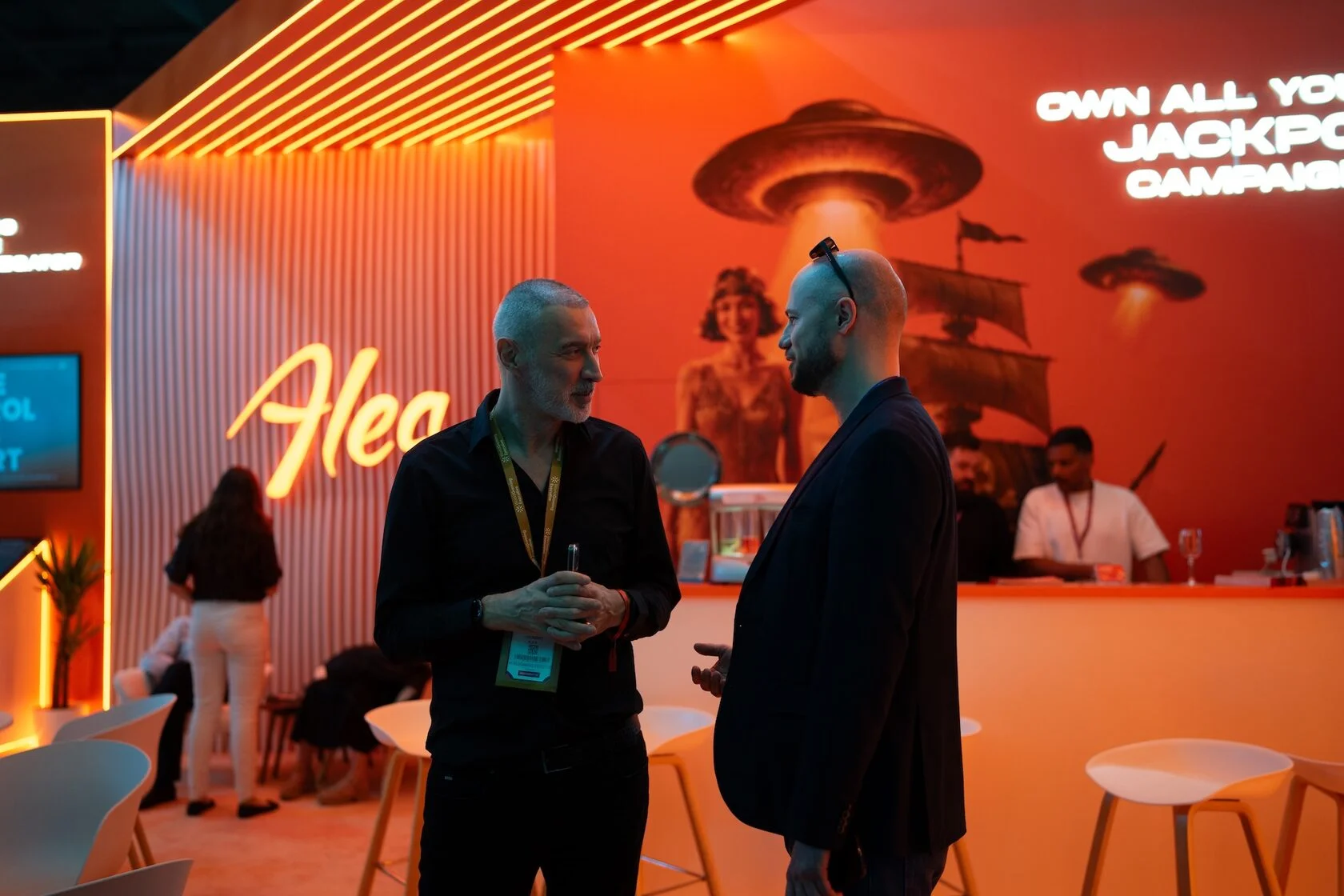
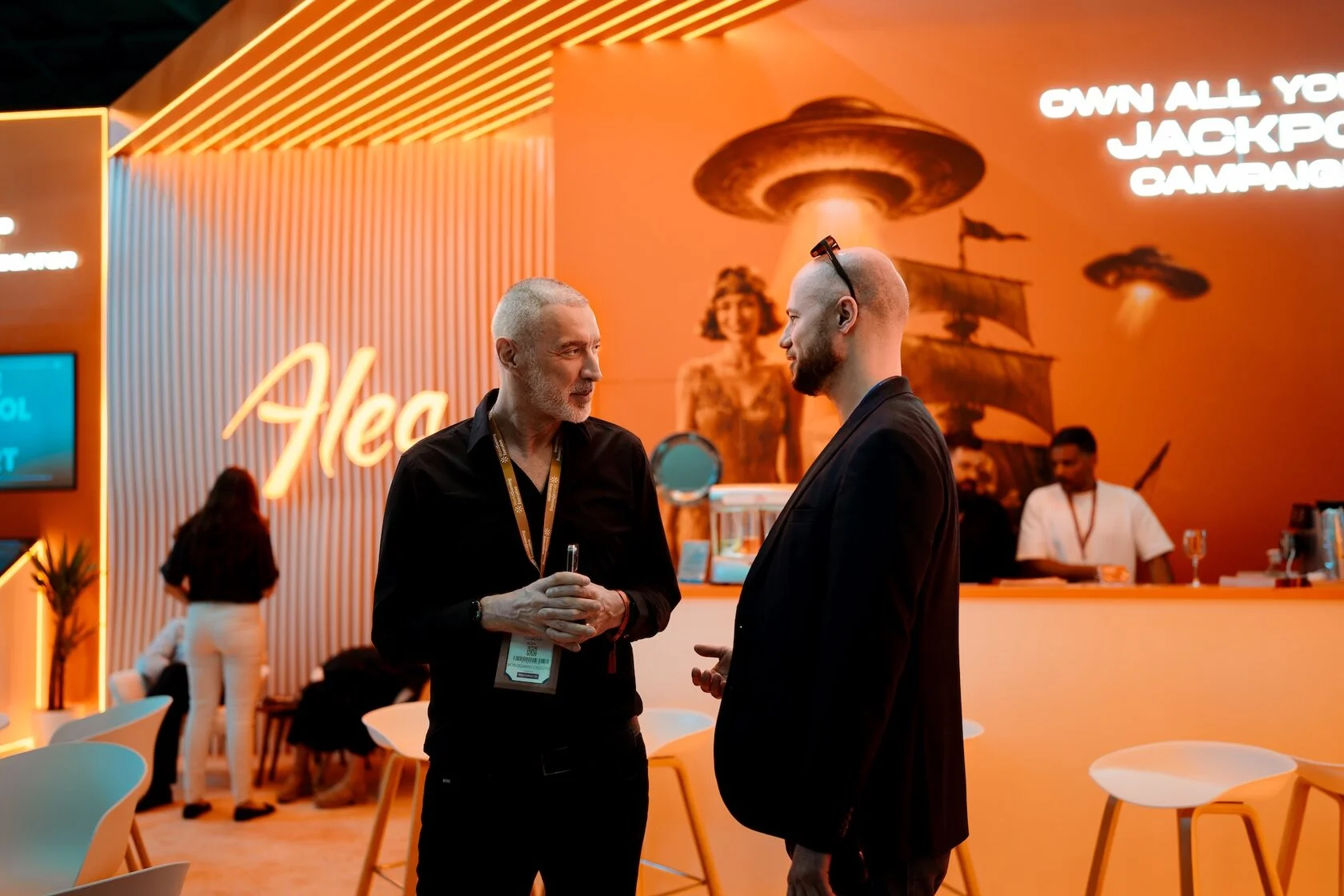
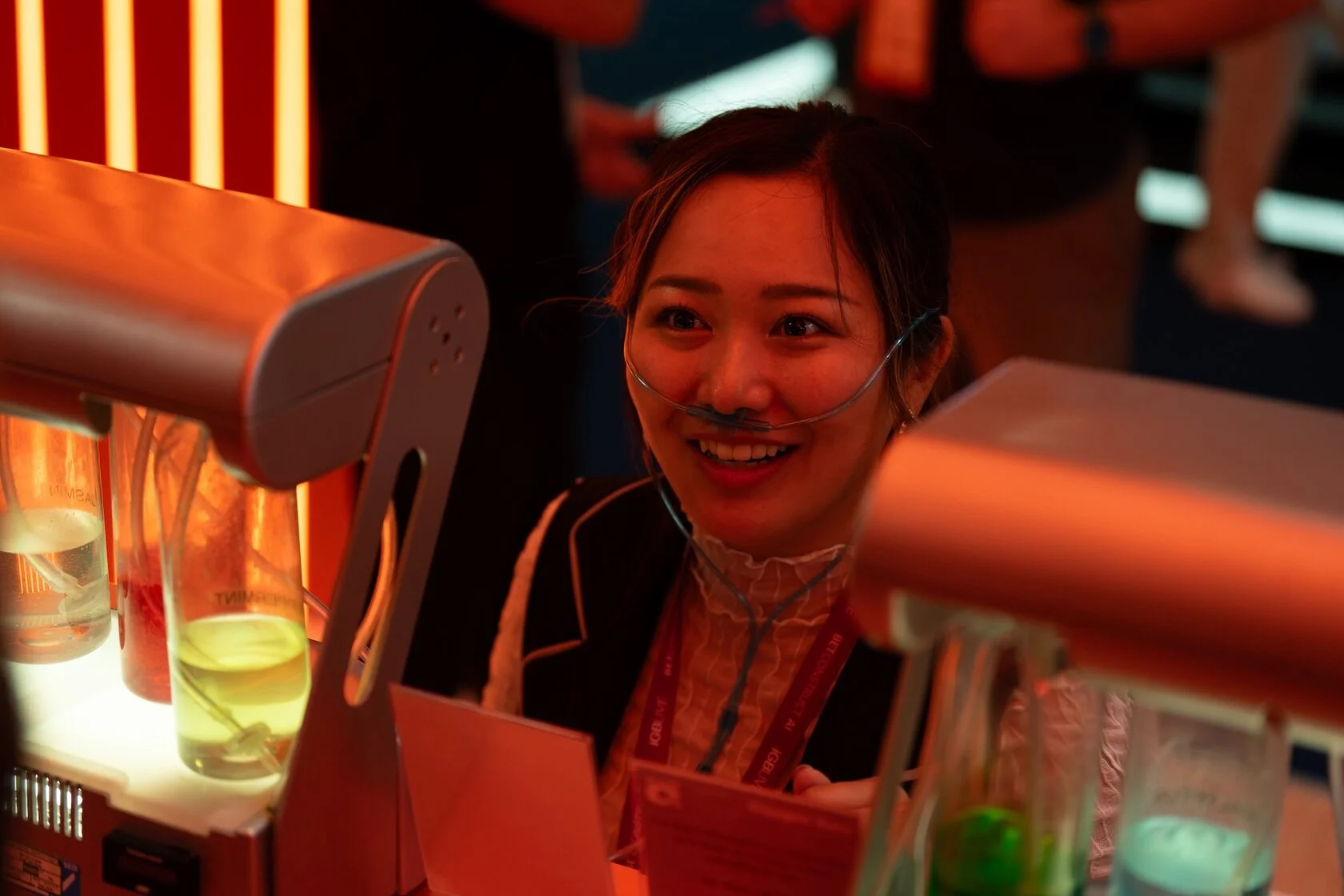
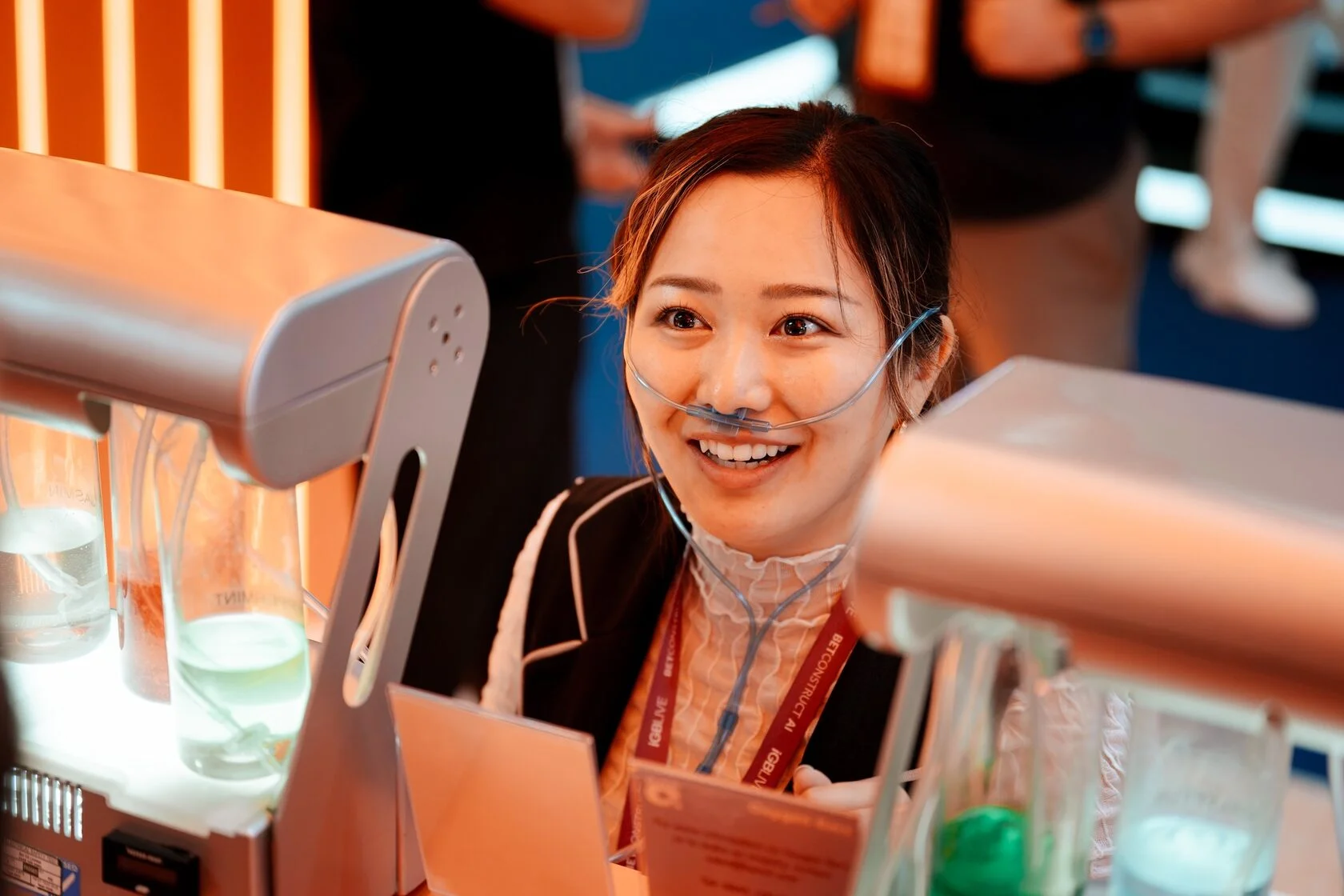
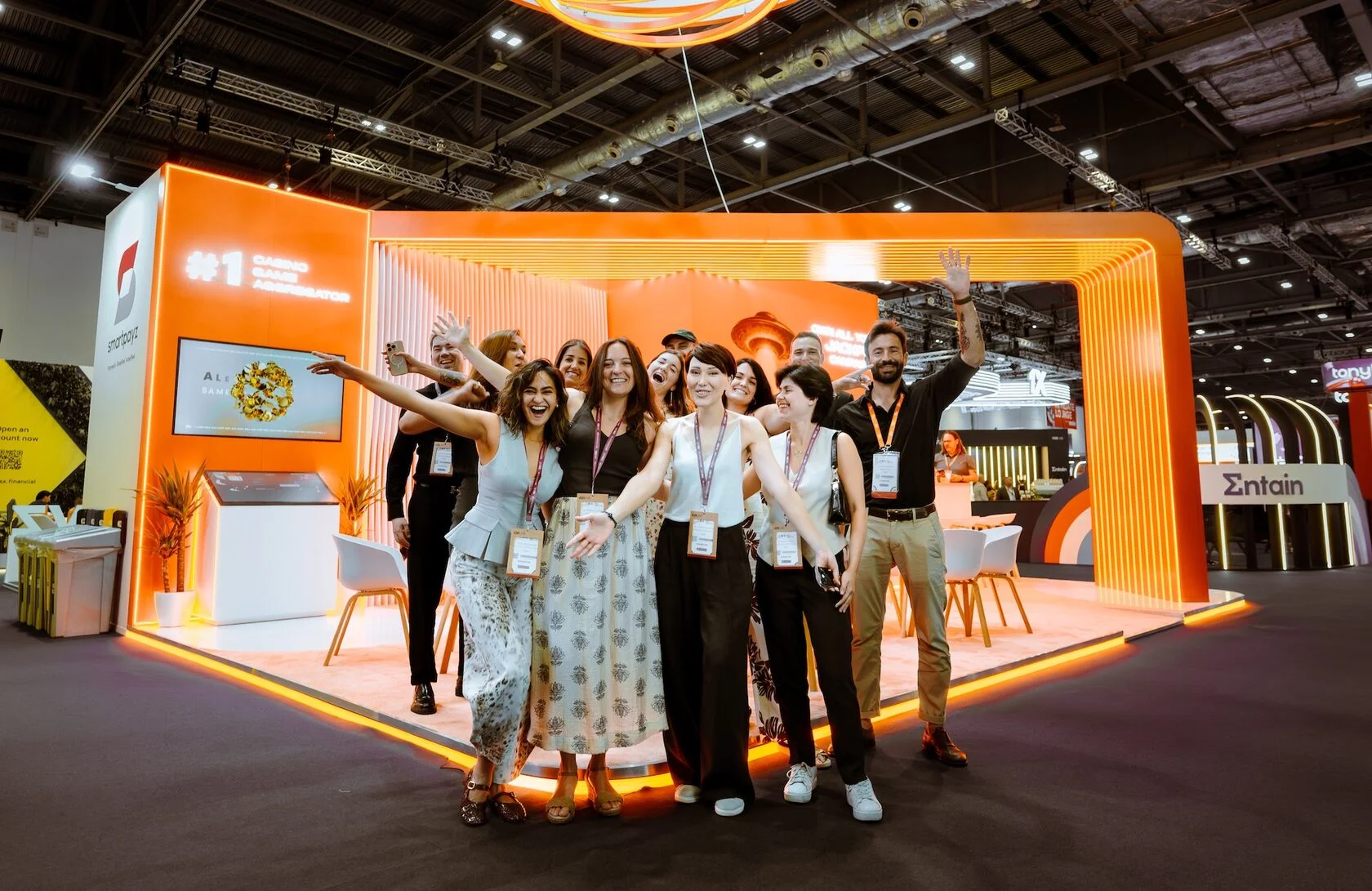
ALEA had built their stand with neon orange lighting throughout. It looked strong in person. On camera, it turned every face a deep, saturated red - not warm, not amber, red. The kind of red that reads on screen as something being wrong.
Before
After
◀▶
Before
After
◀▶
This affects both photo and video, and it affects them differently. For stills, the fix is in colour grading - isolating skin tones and correcting them without touching the brand colours in the background, which need to stay accurate. Our colourist did exactly that. The photos ALEA received and posted throughout the day looked like the event looked, not like the lighting problem it was.

Video is harder to grade under those conditions. The colour information in the highlights is often partially clipped - there's less to work with. The editor had to be selective about which shots were recoverable and which weren't worth including. The final cuts held up.

Three deliverables for ALEA across the two days: a vertical reel from the stand, delivered the following morning for social posting; a short reel from a private evening event they hosted for clients and colleagues at Tower Bridge, which needed to feel like London at night rather than a conference recap; and a full after-movie combining footage from both days. All three were delivered within three days of the shoot.

The Tower Bridge event was a separate logistical piece - ALEA had hired one of the bridge's internal spaces for an evening networking session. The brief for that reel was deliberately narrow: show London, show the atmosphere, keep it short. The stand footage and the Tower Bridge footage were then cut together for the after-movie, which had a different pace and purpose from either reel on its own.

Client two: the stand had almost nothing to film

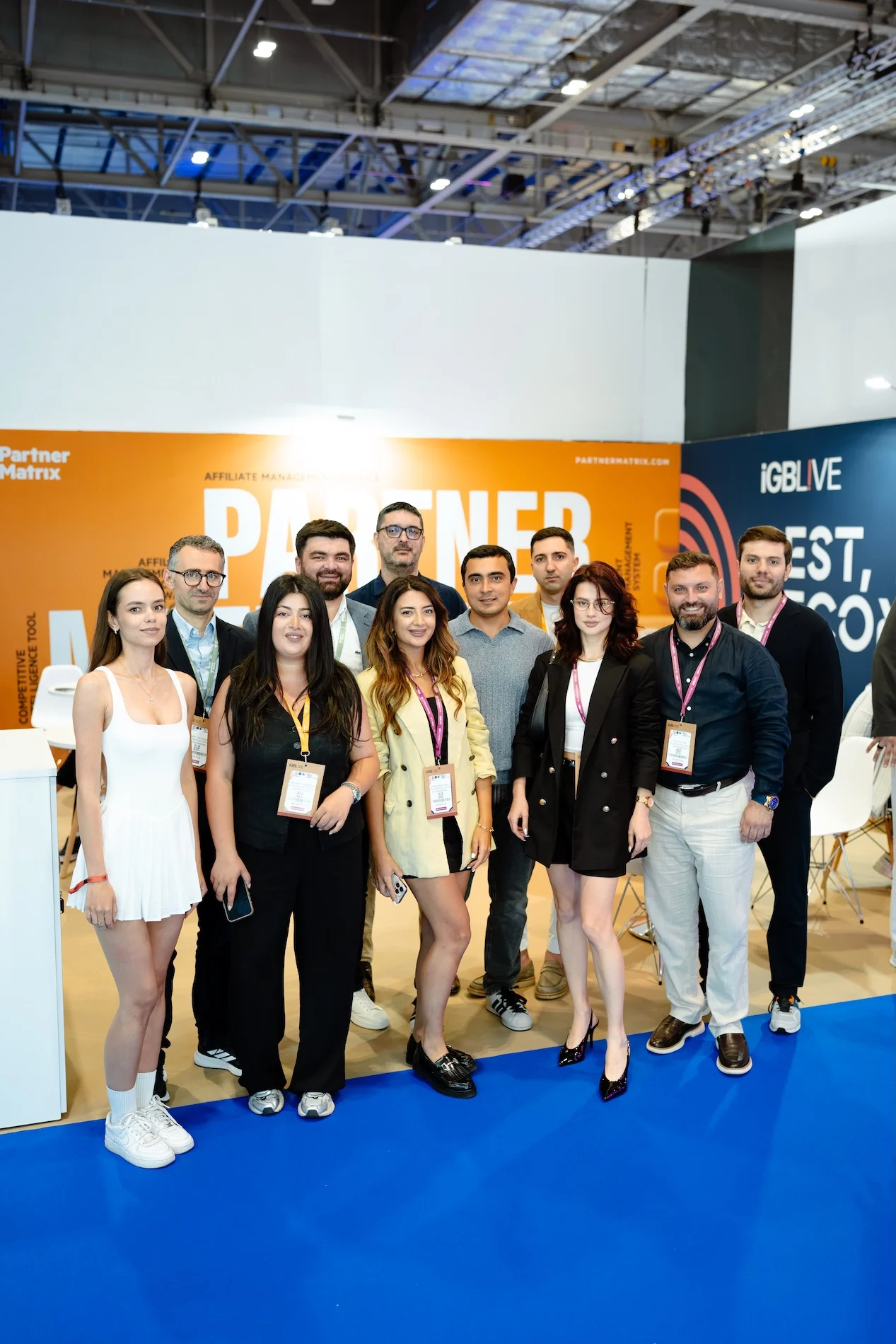
Partner Matrix were a new client. Their stand was two banners carrying their logo and a key phrase, and six tables for meetings. No activation, no demonstration, no product to show. The banners were shorter than the surrounding stands, which meant the top third of the frame behind them was a strip of bare, slightly damaged white wall.
The client's brief still required a highlight video.

Partner Matrix were a new client. Their stand was two banners carrying their logo and a key phrase, and six tables for meetings. No activation, no demonstration, no product to show. The banners were shorter than the surrounding stands, which meant the top third of the frame behind them was a strip of bare, slightly damaged white wall.

The client's brief still required a highlight video.

The only inherent visual material on the stand was a small number of networking conversations and, at a few points across the day, staff pouring drinks for clients. One of their managers had a ten-minute speaking slot on the IGB main stage, which was the strongest visual moment available - someone at a lectern addressing a room reads as activity even when the stand doesn't.
The production approach was to create movement where the environment didn't offer it: camera angles that avoided the wall above the banners, handheld and gimbal work that kept energy in the frame when the subject matter was two people talking across a table, low shutter speed on select shots to introduce motion blur that reads as dynamic without being dishonest about what was happening.

The music the client supplied was fast and high-energy. On a dense stand with a lot happening, that track would have worked. Against footage of a sparse space and quiet meetings, it exposed the gap between what the brief assumed the stand would be and what it actually was. The edit had to work harder to justify the track's energy, not just cut to it.

IGB ran an after-party at The Shard the same evening. Partner Matrix attended, and one of their representatives picked up an award during the event. We filmed it. That footage gave the edit something it didn't otherwise have - a moment with a clear outcome, a specific thing that happened. It went in.

What the split-team structure requires

Four crew covering two clients in the same venue sounds efficient. It introduces one consistent problem: you cannot be in two places simultaneously when something unexpected happens at both of them.

The way to manage it is to make sure each pair has enough autonomy to make production decisions without waiting. Brief them fully before the shoot, establish what's needed for each deliverable, agree on what they should flag versus what they should just handle. On a two-day event that runs into an evening activation at a separate location, the brief is doing real work by the end of day one.
Photography was running in parallel on both clients throughout. Processed images were being transferred to the colourist during the event - not at the end of the day. That meant ALEA had usable, corrected photos for live posting while the second day of the event was still running. That's the practical value of post-production capacity that doesn't wait for the shoot to finish.

The actual variable in event video production

Equipment and crew are commodities at a certain level of the market. Most event video production companies in London are working with similar kit and similar technical competence.

What separates event video production that's useful from event video production that's technically fine but forgettable is whether the team can read what a shoot actually offers and make decisions accordingly. A stand with two banners and six tables isn't going to yield the same footage as a stand with activations, product demos, and sixty people moving through it every hour. Pretending otherwise produces a video that looks exactly like what it is - footage that was shot because someone had to shoot something.

The honest production decision at Partner Matrix was to work with the Shard footage, the stage appearance, and the best of what the stand offered, and to cut around the rest. The result was a usable highlight video. It wasn't the video the client's music track implied they were going to get.

The photography ran on a separate brief from the video. Both clients needed processed images delivered during the event - not at the end of the day, not the following morning. The photographer was editing and transferring selects to the colourist continuously throughout each day. ALEA's orange lighting created the same skin tone problem in stills as it did in video, and the colourist corrected each batch before it went to the client. By the time IGB Live closed on the second day, ALEA had a near-complete gallery of corrected images ready to distribute to attendees and post across their channels. The photos below were taken across both days of the event.

FAQ

How do you colour-correct event footage shot under saturated branded lighting?
For stills, the fix is in post: isolate the skin tones and correct them separately from the background, so the brand colours stay accurate while faces look normal. At IGB Live, ALEA's neon orange stand lighting turned every face deep red on camera. The photos delivered for live posting looked like the event looked. Video is harder - highlights clip under that kind of saturation, so the editor has to identify which shots have enough colour information to grade and which to leave out.
What do you film at a trade show stand that has no activation or product demo?
The stage appearance, if there is one. Conversations filmed with angles and movement that introduce energy the static environment lacks. Any moment with a specific outcome - an award, a presentation, anything with a clear before and after. At IGB Live, Partner Matrix had two banners, six tables, and a speaking slot on the main stage. That slot was the strongest available material. The Shard after-party footage, which included an award presentation, gave the edit a moment that the stand itself couldn't provide.
How do you run two event video crews simultaneously at the same venue?
Brief both pairs fully before the shoot - what each deliverable requires, what decisions they should make independently versus flag. On a two-day event running into an evening activation at a separate location, the brief is doing real work by the end of day one. At IGB Live, four crew covered ALEA and Partner Matrix simultaneously. The split works only if each pair can operate without waiting - the moment they need to escalate a production decision, the structure breaks down.
How quickly can event photos be delivered during a multi-day trade show?
Same-day, continuously, if the post-production pipeline runs in parallel with the shoot rather than after it. At IGB Live, processed images were being transferred to the colourist during the event. ALEA had corrected photos ready for live posting while the second day was still running. The photographer was making selection decisions in the field, not at a desk at the end of the day - that is what makes the timing possible.
What do you do when the client's chosen music does not match the footage available?
You cut harder, not faster. At IGB Live, Partner Matrix supplied a fast, high-energy track for a stand with sparse activity and quiet meetings. Cutting directly to the track's energy would have exposed the gap between what the brief assumed the stand would be and what it was. The edit had to justify the energy through camera movement and selective inclusion of the strongest material - the stage appearance, the Shard footage - rather than cut around the problem by using filler clips.
What were the deliverables for ALEA at IGB Live London?
Three, delivered within three days of the shoot. A vertical reel from the stand, delivered the following morning for social posting. A short reel from a private evening event at Tower Bridge, briefed specifically to show London at night rather than extend the conference footage. A full after-movie combining both days. Each had a different pace and purpose. The Tower Bridge footage and the stand footage were not interchangeable - they were cut separately before being combined.
How do you film a trade show stand when it is visually sparse?
Camera work has to carry the energy the environment does not supply. At Partner Matrix's stand, angles were chosen to exclude the bare wall above the banners. Handheld and gimbal work kept movement in the frame during conversations. Select shots used a lower shutter speed to introduce motion blur that reads as dynamic. None of that changes what the stand offered - it means the footage of what was there looks considered rather than incidental.
What is the difference between filming a returning client and a first-time client at the same event?
With a returning client, the brief requires less explanation. Working with ALEA across Malta, Barcelona, and Rome before IGB Live meant the crew understood the brand's visual identity, what ALEA's stand activity tends to look like, and what the deliverables need to do. A first-time client like Partner Matrix requires more active reading of the situation on the day - there is no accumulated understanding to draw on, so the crew has to make more decisions from observation rather than from experience with that specific client.
How much does event videography at IGB Live London cost?
Depends on the number of clients, crew size, shoot duration, and deliverables required. At IGB Live, We Stream ran four crew across two clients over two days, with same-day photo delivery, three separate video deliverables for one client, and a highlight video for the other - including an evening activation at a separate venue. For a full breakdown of day rates and event packages, see our London video production costs 2026 guide.
What separates useful event video from technically adequate event video?
Whether the team reads what a shoot actually offers and makes decisions accordingly. A stand with two banners and six meeting tables will not yield the same footage as one with activations and sixty people moving through it. Filming it as if it will produces footage that looks exactly like what it is. The production decision at Partner Matrix was to work with the stage appearance, the Shard award moment, and the best of what the stand offered, and cut around the rest.
Write us
© All rights reserved. We stream
team@westream.uk